
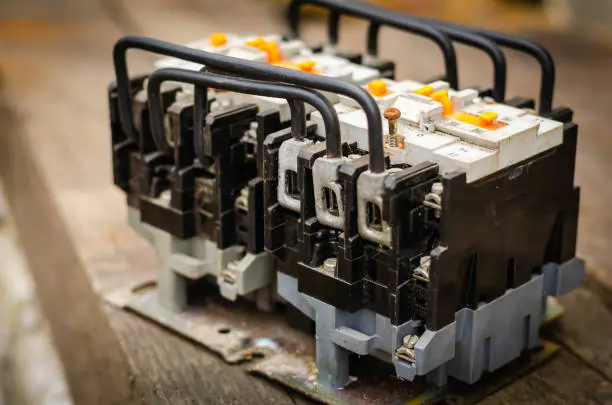
Electric motors are the backbone of modern industry, powering a wide range of applications, including manufacturing machinery, HVAC systems, and pumps. They run for long hours, often under demanding conditions. But just like any hardworking machine, motors are vulnerable to damage when overloaded with excessive current. To safeguard them, electrical engineers rely on protective devices designed to sense abnormal conditions.
One such essential protection device is the overload relay. Simple yet highly effective, it acts as a safeguard that detects when a motor is carrying more current than it should. By intervening at the right time, an overload relay helps prevent overheating, breakdowns, and costly repairs.
What is an Overload Relay?
An overload relay is a protective component placed in motor control circuits. Its job is to monitor the amount of current flowing into a motor and trip or interrupt the circuit if the current exceeds a safe threshold for too long. Unlike fuses or circuit breakers, which react instantly to sudden short circuits, an overload relay responds to sustained overcurrent conditions caused by mechanical overloads or blocked shafts.
Think of it as a safety cushion. It doesn’t cut power immediately during a brief surge, but it steps in when the overcurrent persists long enough to risk overheating the motor windings. By doing so, it prevents motor burnout and extends equipment life.
Types of Overload Relays
There are different kinds of overload relays, each suited to specific environments and requirements:
- Thermal Overload Relay
Uses a bimetallic strip that bends when heated by excess current. Once it bends far enough, it triggers the relay to disconnect the motor.
- Magnetic Overload Relay
Works on the principle of electromagnetism. When the current exceeds the safe limit, the magnetic field activates a mechanism to open the circuit.
- Electronic Overload Relay
A more advanced version that uses sensors and microprocessors to monitor current with precision. It offers adjustable settings and faster response times.
How Does an Overload Relay Work?
The principle is straightforward yet effective. When a motor runs normally, the relay stays inactive. If the motor begins to draw more current than it should, the relay senses the excess.
- Short Overloads: If the overload is brief, such as during motor startup, the relay ignores it.
- Prolonged Overloads: If the excess current continues, the relay heats up (in thermal types) or builds magnetic force (in magnetic types) until it trips.
- Tripping Action: This disconnects the motor from its power source, preventing overheating and potential burnout.
Why Motors Need Overload Protection
Motors are expensive assets, and their failure can halt entire production lines. Continuous exposure to high current leads to excessive heat, which weakens insulation, damages windings, and eventually burns out the motor.
An overload relay acts as a first line of defense by catching problems before they escalate. By disconnecting the motor during overloads it saves the equipment and reduces the risk of fire or further electrical hazards.
Key Benefits of Using an Overload Relay
There are a lot of benefits to using an overload relay. These benefits make the overload relay a must-have in any motor control circuit.
- Cost Savings: Prevents expensive motor repairs and replacements.
- Safety: Reduces fire risk by cutting off power before overheating.
- Longevity: Extends motor life by avoiding thermal stress.
- Efficiency: Keeps production running smoothly by preventing catastrophic failures.
- Flexibility: Modern electronic relays allow fine-tuning for specific motor loads.
The Silent Guardian of Motor Safety
An overload relay may appear to be a small component in an electrical panel, but its role in motor safety is significant. By monitoring current flow and disconnecting the motor during sustained overloads, it prevents overheating, extends motor life, and saves businesses from costly downtime.
Whether it’s in factories, offices, or homes, this device acts as a quiet protector, ensuring motors keep running smoothly and safely. For anyone relying on motors, understanding the value of an overload relay is not just technical knowledge; it’s an investment in safety, efficiency, and long-term reliability. With the right partner, you can be assured of solutions that enhance motor performance and protection for years to come.
Read more: How This Weekly Shot Helps With Appetite Control