
Key Takeaways
- Cocoa percentage influences chocolate’s flavor, texture, and health benefits.
- Lower cocoa chocolates are sweeter and creamier, while higher percentages offer a more intense, bitter experience.
- Higher cocoa content is commonly associated with greater health benefits, as it contains more flavonoids and less sugar.
- Understanding cocoa percentage empowers you to choose chocolate that matches your taste and health preferences.
Table of Contents
- Decoding Cocoa Percentage
- Flavor Profiles Across Cocoa Percentages
- Texture and Mouthfeel
- Health Considerations
- Choosing the Right Chocolate for You
Decoding Cocoa Percentage
Every bar of chocolate displays its cocoa percentage, giving consumers valuable information about its composition and character. Whether considering milk or dark chocolate, this percentage refers to the total content of ingredients derived from cocoa beans, including both cocoa solids and cocoa butter. For example, a bar labeled 75% cocoa contains three-quarters cocoa-based ingredients, with the remaining quarter made up of sugar and possible additions, such as milk, depending on the style. Discovering single-origin gourmet chocolate bars can add another level to your tasting journey, where the uniqueness of cocoa from distinct regions is celebrated in every bite. For those who appreciate craftsmanship, single-origin gourmet chocolate bars provide a remarkable experience.
The cocoa percentage is not just a number; it’s the blueprint of your chocolate’s personality. It influences how sweet, bitter, creamy, or robust a bar will taste. Understanding what this number means helps chocolate enthusiasts select a bar that aligns with their preferences. As cocoa percentage goes up, the space for sugar and other ingredients drops, radically altering the chocolate’s overall profile.
Flavor Profiles Across Cocoa Percentages
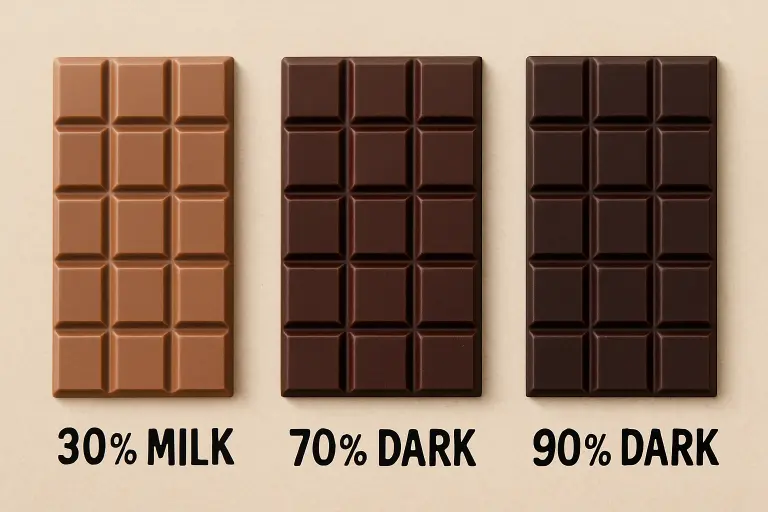
One of the most vivid ways cocoa percentage impacts chocolate is through its flavor profile. Whether you enjoy indulgent milk chocolate or prefer the boldness of super dark varieties, the cocoa content guides the taste experience:
- Milk Chocolate (20-50% cocoa): Lower cocoa percentages yield a sweeter, creamier experience. Milk solids and higher sugar ratios make this chocolate a favorite for those who enjoy mellow flavors and a velvety mouthfeel. Milk chocolate, often ranging from 20 to 50% cocoa, tempers the intensity of the cocoa bean with a buttery smoothness and gentle sweetness.
- Dark Chocolate (70-85% cocoa): As cocoa content climbs, chocolate’s flavors become deeper and more intense. At these levels, expect to taste the nuanced, sometimes fruity or earthy notes of cocoa. The sweetness is dialed back as sugar content drops, unmasking the chocolate’s authentic character.
- High Cocoa Dark Chocolate (85-100% cocoa): This is chocolate in its purest form. With little to no sugar, high-percentage chocolates impress with their robust, sometimes gritty flavors. Notes of bitterness stand out, often with hints of roasted coffee, fruit, or even a savory edge. Such bars are favored by those who relish the complexity and depth found in unadulterated cocoa.
As cocoa content varies, each chocolate bar offers a unique tasting adventure. Exploring chocolates with different percentages provides insight into the remarkable diversity found within a single ingredient.
Texture and Mouthfeel
Textural changes accompany the shift in cocoa percentage. Milk chocolate feels softer and creamier thanks to higher sugar and milk content. These ingredients reduce the density of cocoa solids, making each bite melt smoothly on the tongue. In dark or high-percentage chocolate, the reduced sugar and absence of milk create a firm, snappy texture and a denser mouthfeel. Such chocolates can feel almost granular or dry, but many aficionados value the intensity and satisfying “snap” that comes with a high cocoa content. The interplay of ingredients shapes not only taste but also how the chocolate feels as it melts, crumbles, or coats the mouth.
Health Considerations
Choosing chocolate by cocoa percentage is not just about taste, texture, or indulgence; it also relates to potential health benefits. Generally, the higher the cocoa content, the more flavonoids and antioxidants a bar contains. Dark chocolate, in particular, is prized for its ability to support heart health, elevate mood, and provide a source of minerals. Research has linked high-cocoa chocolates with lower blood pressure and improved cardiovascular outcomes, thanks to beneficial plant compounds. Additionally, high-percentage chocolate means less added sugar, making it appealing to those mindful of sugar intake. When selecting chocolate, it’s important to consider the overall quality and ingredients beyond just cocoa percentage. Moderation remains key, as even the healthiest options can have drawbacks if consumed excessively. Enjoying chocolate responsibly allows you to savor its benefits while maintaining a balanced diet.
Choosing the Right Chocolate for You
Ultimately, the best chocolate for you comes down to striking a balance between enjoyment and your personal goals. If you prefer something sweet and creamy, milk chocolate or bars at the lower end of the cocoa spectrum are likely to satisfy. For those who crave more complexity or want to maximize health benefits, high-percentage dark chocolate offers intense flavors and higher levels of antioxidants. When selecting a chocolate bar, consider your taste preferences and the sugar and additive content. Quality chocolate uses minimal ingredients, letting the cocoa shine and maximizing potential benefits for both your palate and well-being. Remember that moderation is key, as even the healthiest options should be enjoyed in balance. Exploring different types can help you discover the flavors you prefer most and align with your lifestyle.
Conclusion
Understanding cocoa percentage is crucial for fully appreciating and choosing the right chocolate for your taste and health goals. From the creamy sweetness of lower-percentage milk chocolates to the rich, complex flavors of high-percentage dark chocolates, each type offers a unique sensory experience. Higher cocoa content not only boosts flavor richness but also provides potential health benefits, such as more antioxidants and less sugar. By paying attention to cocoa percentages and exploring different options, chocolate lovers can make informed decisions, savoring each bite while enjoying a mindful and satisfying treat.
Also Read-Top 5 Ingredients to Avoid in Cat Food