
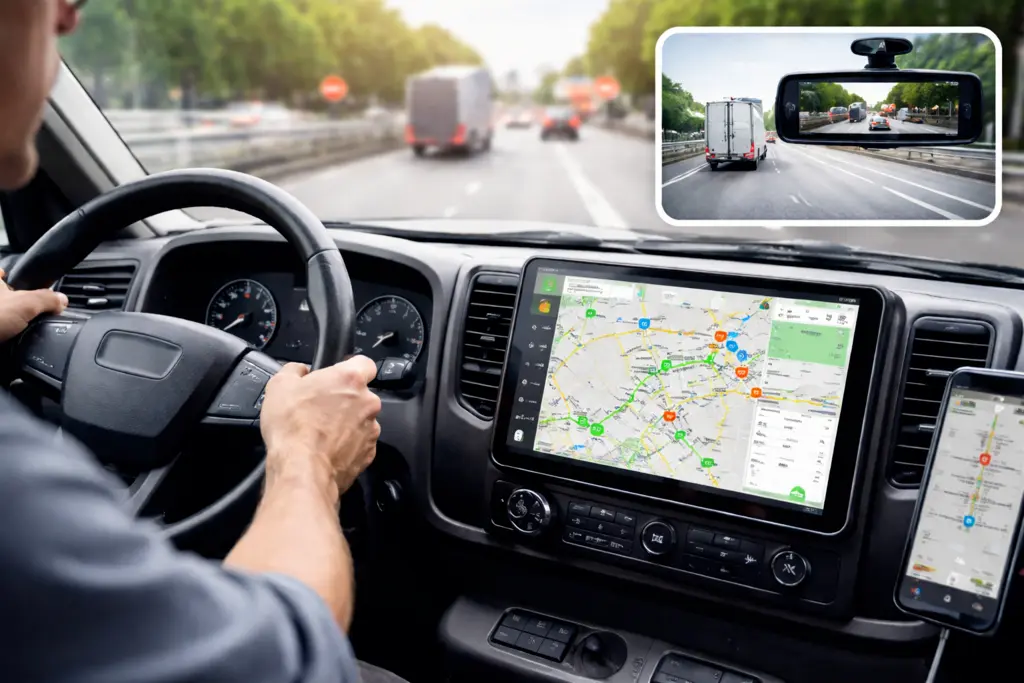
In 2026, commercial fleet management is more data-driven than ever. Rising fuel prices, stricter compliance requirements, increasing insurance scrutiny, and customer expectations for real-time delivery visibility are reshaping how businesses manage their vehicles. As a result, selecting the right tracking system is no longer a simple technology purchase—it is a strategic operational decision.
Modern fleets often combine tools such as a GPS tracker and a dash cam with gps to improve visibility, safety, and accountability. However, choosing the right configuration requires careful evaluation of cost, scalability, compliance needs, and long-term operational impact. A poorly chosen system can create data overload, driver resistance, or unnecessary expenses, while a well-planned solution can significantly reduce risk and improve profitability.
This article explores the key factors businesses should consider when selecting a solution in 2026, including trade-offs between hardware types, data management approaches, integration capabilities, and driver impact.
The Evolving Role of Fleet Tracking in 2026
Fleet tracking has moved beyond simple location monitoring. Today’s solutions provide insights into driver behavior, vehicle diagnostics, fuel consumption, route optimization, asset utilization, and incident documentation. The goal is not merely to know where vehicles are, but to understand how they are being used and how performance can be improved.
The increasing availability of analytics and AI-driven reporting has transformed vehicle monitoring into a performance management tool. This shift means businesses must evaluate not only hardware reliability but also data accuracy, reporting depth, and system integration capabilities.
The key question is no longer “Do we need tracking?” but rather “What level of monitoring aligns with our operational goals?”
Hardware Options: Device Selection and Trade-Offs
One of the first decisions involves hardware type. Commercial fleets typically choose among hardwired units, plug-and-play devices, battery-powered trackers, and camera-integrated solutions.
Hardwired Units
Hardwired devices connect directly to the vehicle’s electrical system. They offer stable power, consistent data transmission, and access to engine diagnostics. However, installation requires professional labor, increasing upfront costs. For large fleets, installation downtime can temporarily disrupt operations.
Plug-and-Play Devices
Plug-and-play devices are easier to install and remove. They are suitable for small or growing fleets. The trade-off is that drivers can potentially unplug them, which may compromise accountability.
Battery-Powered Options
Battery-powered solutions are useful for trailers or non-powered equipment. However, battery life management becomes an operational consideration, especially in high-use environments.
Camera-Integrated Systems
Many businesses now deploy a dashcam GPS tracker that combines video evidence with location data. These devices strengthen liability protection and driver accountability. The trade-off lies in higher data storage needs, increased bandwidth consumption, and potential privacy concerns.
Selecting the right hardware involves balancing ease of installation, data depth, long-term durability, and budget constraints.
Data Accuracy and Real-Time Visibility
In 2026, real-time visibility is expected rather than optional. Customers often demand live tracking links, and managers rely on instant alerts to address issues such as unauthorized stops or route deviations.
However, higher tracking frequency generates more data. This creates two challenges:
- Data management complexity
- Information overload
A highly detailed GPS tracking system can provide second-by-second updates, but if managers lack tools to interpret the data effectively, it may reduce efficiency rather than improve it. Businesses must evaluate dashboard usability, report customization options, and alert filtering capabilities before committing to a provider.
The goal should be actionable insights—not just raw data.
Safety and Liability Considerations
Safety remains one of the strongest drivers behind adoption. Video evidence and driver behavior analytics can significantly reduce accident disputes and false claims. Insurance providers increasingly offer premium reductions for fleets that demonstrate strong safety monitoring practices.
However, implementing advanced monitoring tools may raise concerns among drivers. Employees may feel they are under constant surveillance, which can affect morale and retention. Transparent communication is essential. Businesses should clearly explain that monitoring tools are designed to protect both the company and drivers from liability and fraud.
The challenge is finding a balance between safety oversight and maintaining a culture of trust.
Regulatory Compliance and Legal Implications
In many regions, commercial fleets must comply with evolving transportation regulations, including hours-of-service tracking, electronic logging requirements, and emissions standards. An effective GPS tracking system can simplify compliance reporting and reduce administrative burdens.
Yet regulatory requirements vary by industry and geography. Companies operating across multiple jurisdictions must ensure their chosen platform supports local compliance frameworks. Failing to verify this compatibility can result in unexpected penalties or costly system changes later.
Legal considerations also extend to data retention policies. Businesses must determine how long video and location data should be stored and how it will be protected from unauthorized access.
Integration with Existing Business Systems
Fleet tracking rarely operates in isolation. In 2026, most businesses rely on integrated ecosystems that include dispatch software, payroll platforms, maintenance scheduling systems, and customer management tools.
When evaluating providers, integration capabilities should be a primary consideration. Open APIs and compatibility with third-party software reduce manual data entry and streamline workflows. However, advanced integration features may come at a higher subscription cost.
Organizations must weigh whether integration complexity justifies the efficiency gains. For large fleets, integration can dramatically improve productivity. For smaller operations, simpler standalone systems may be sufficient.
Scalability and Future Growth
Technology investments should align with long-term business plans. A small fleet today may expand significantly within a few years. Choosing a solution that cannot scale easily may lead to costly system replacements.
Scalability involves more than adding devices. It includes user account management, data storage capacity, customer support infrastructure, and feature upgrades. Some providers offer modular pricing models, allowing companies to add features gradually.
The trade-off often lies between affordability and flexibility. Lower-cost systems may meet current needs but lack advanced features required for future expansion.
Cost Considerations: Beyond the Sticker Price
Cost remains a decisive factor. Expenses typically include:
- Hardware purchase or lease
- Installation
- Monthly subscription fees
- Data storage charges
- Maintenance and replacement
While upfront costs are visible, long-term operational savings often justify investment. Reduced fuel consumption, improved route efficiency, fewer accidents, and better asset utilization can significantly offset subscription fees.
However, overinvesting in features that go unused can reduce return on investment. Businesses should conduct a needs assessment before selecting advanced analytics or AI modules.
The key is aligning cost structure with measurable performance improvements.
Impact on Operational Efficiency
When implemented correctly, fleet monitoring technology can improve dispatch coordination, reduce idle time, optimize routing, and streamline maintenance scheduling.
For example, predictive maintenance alerts can reduce unexpected breakdowns and extend vehicle lifespan. Similarly, route optimization tools can shorten travel distances and reduce fuel consumption.
Yet there is a learning curve. Managers and drivers must be trained to use dashboards effectively. Without proper onboarding, advanced systems may remain underutilized.
Operational improvement depends not just on technology but on how well teams adopt it.
Cybersecurity and Data Protection
With increased connectivity comes increased risk. Fleet tracking platforms transmit sensitive location data, vehicle diagnostics, and sometimes video footage. A security breach could expose business operations or compromise client confidentiality.
Businesses should evaluate encryption standards, user access controls, and compliance with cybersecurity regulations. While highly secure platforms may cost more, the financial and reputational consequences of data breaches can far exceed subscription fees.
Cybersecurity is no longer optional—it is an essential evaluation criterion.
Environmental and Sustainability Considerations
Sustainability is becoming a strategic priority for many companies. Fleet tracking solutions can support environmental goals by reducing fuel consumption and optimizing route efficiency.
Advanced analytics can measure carbon emissions and identify opportunities for greener operations. Businesses aiming to meet ESG targets may find value in systems that provide detailed environmental reporting.
However, integrating sustainability metrics may require more sophisticated software packages. Companies must assess whether these features align with their environmental objectives and reporting obligations.
Balancing Technology with Human Factors
Technology alone does not guarantee success. Fleet tracking influences workplace culture, management practices, and driver behavior.
Transparent communication about monitoring policies is essential. Clear guidelines on data use, privacy protection, and disciplinary procedures help prevent misunderstandings.
Training programs should emphasize how monitoring tools support safety and efficiency rather than micromanagement. When drivers understand the protective benefits, adoption tends to improve.
Ignoring the human impact of monitoring decisions can lead to resistance, decreased morale, or higher turnover rates.
Making an Informed Decision in 2026
Choosing the right solution requires structured evaluation. Businesses should begin by identifying operational pain points, defining measurable objectives, and estimating expected ROI. Pilot programs can help test usability and compatibility before full deployment.
Key evaluation questions include:
- Does the platform align with our operational goals?
- Can it scale as our fleet grows?
- Does it integrate with existing software?
- Are data security measures sufficient?
- Will employees accept and adopt the system?
A well-chosen system enhances visibility, strengthens accountability, and supports strategic growth. A poorly chosen one may increase costs without delivering meaningful improvement.
Final Thoughts
In 2026, fleet monitoring is no longer optional for competitive commercial operations. Advances in connectivity, analytics, and integration capabilities have transformed vehicle tracking into a powerful operational tool. However, selecting the right solution involves balancing cost, scalability, safety, compliance, data management, and employee impact.
By carefully evaluating hardware options, integration features, cybersecurity standards, and long-term growth needs, businesses can choose a solution that strengthens efficiency while supporting driver trust and regulatory compliance.
Ultimately, the right investment is one that delivers actionable insight, measurable cost savings, and sustainable operational improvement—ensuring that commercial fleets remain efficient, accountable, and competitive in an increasingly data-driven transportation landscape.
Also Read