
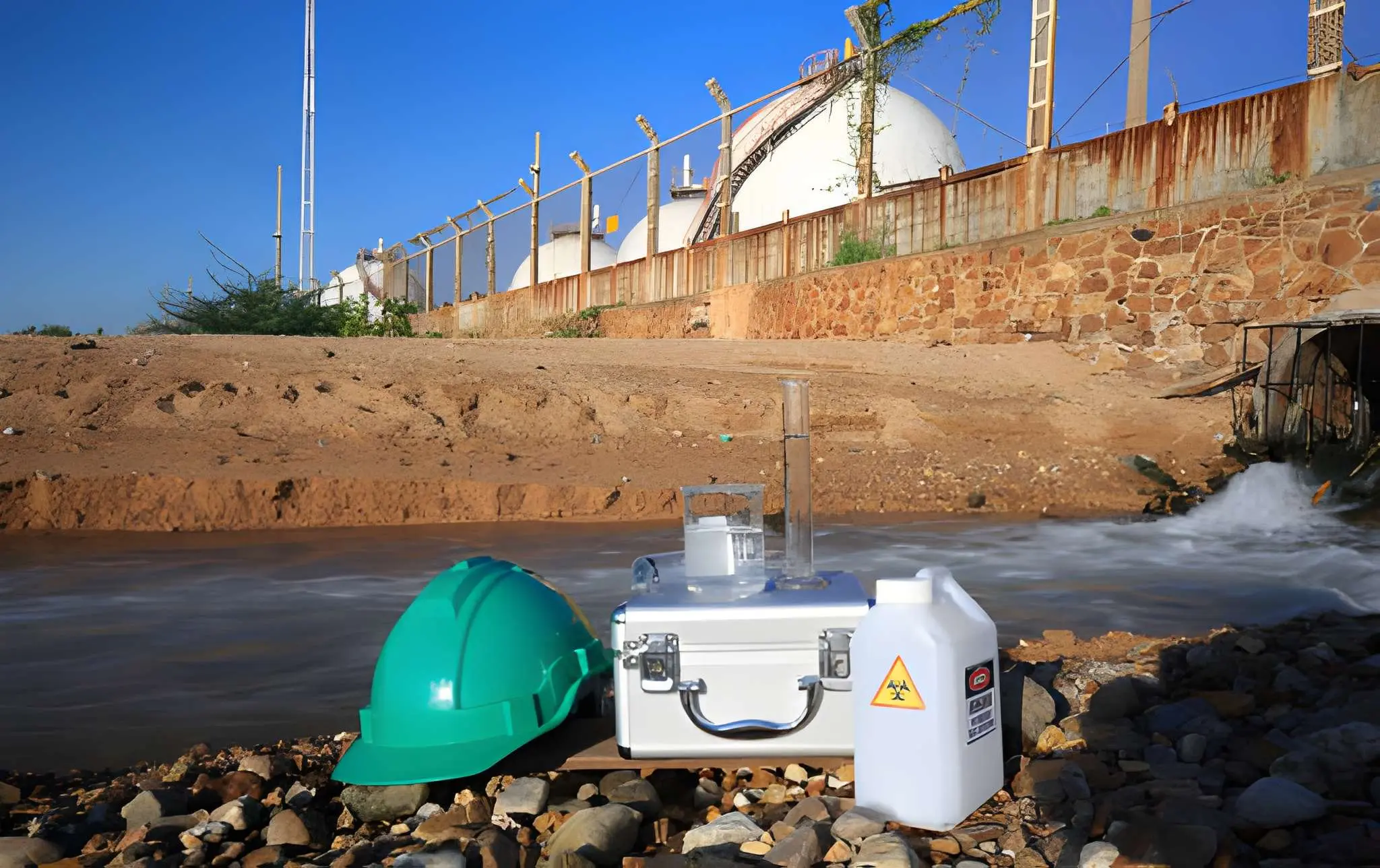
Hydrogen sulfide (H2S) is one of the most persistent and high-risk challenges in oil and gas operations. Even at low concentrations, H2S poses serious threats to worker safety.
At higher levels, it can corrode critical infrastructure and expose companies to costly regulatory violations.
This is why choosing a reliable H2S scavenger product and solutions is a strategic choice that directly affects safety records and long-term operating costs.
Why Is H2S Control So Important in Oil & Gas Operations?
H2S is commonly found in upstream, midstream, and downstream environments, especially in sour gas fields and aging reservoirs. Without proper treatment, it can quickly create cascading problems across operations. Key risks associated with poor H2S control include:
- Worker safety hazards, which include respiratory injury or fatal exposure.
- Accelerated corrosion of pipelines, storage tanks, and processing equipment.
- Operational disruptions, such as shutdowns or derating of assets.
- Environmental and emission violations that can lead to fines and reputational damage.
Because H2S risks are both immediate and long-term, mitigation strategies must be scalable and backed by proven chemistry.
What Do H2S Scavengers Do and Why Are They Essential?
H2S scavengers are chemical agents designed to react with hydrogen sulfide and convert it into a non-volatile and non-toxic compound. Unlike mechanical separation methods, scavengers offer fast-acting and flexible solutions that can be deployed across multiple stages of production and processing.
They are widely used to:
- Reduce H2S levels in crude oil, natural gas, and produced water.
- Protect downstream equipment and catalysts.
- Improve safety conditions for operators and maintenance crews.
What Are the Common Types of H2S Scavengers?
Reliable H2S scavenger solutions typically offer multiple chemistries to suit different operating conditions:
- Triazine-based scavengers
- Widely used and cost-effective
- Fast reaction rates
- May cause byproduct buildup if poorly formulated
- Non-triazine liquid scavengers
- Lower solids formation
- Often preferred in continuous operations
- Typically, more environmentally friendly
- Solid scavengers
- Suitable for gas streams and fixed-bed systems
- Longer service life but less flexible.
Why the Right Manufacturer Matters?
#1 Formulation Quality Makes a Real Difference
Two scavenger products with the same label can perform very differently in the field. Variations in chemical formulation, blending quality, and quality assurance practices can dramatically impact:
- Reaction efficiency.
- Dosage requirements.
- Sludge or scale formation.
- Compatibility with existing systems.
#2 Impacts on Safety and System Uptime
Poorly matched or low-quality scavenger products may underperform or create secondary problems, such as fouling or unplanned maintenance. Over time, this can lead to:
- Increased downtime
- Higher chemical consumption
- Greater safety exposure for field teams
What Are The Key Criteria for Choosing Reliable H2S Scavenger Manufacturers
1. Proven Field Data and R&D Strength
Manufacturers should be able to demonstrate performance through:
- Field trial results.
- Case studies across similar assets.
- Ongoing product development and optimization efforts
2. Product Customization Capabilities
No two fields are exactly alike. Reliable H2S scavenger providers understand this and offer:
- Customized formulations based on H2S load and system design.
- Flexible dosing strategies like batch, continuous, or hybrid.
- Technical guidance during commissioning and optimization.
3. On-Site Support and Logistics Reliability
In oil and gas operations, timing matters. Look for suppliers that provide:
- On-site technical support when needed.
- Reliable supply chains and consistent product availability.
- Rapid response to operational upsets or H2S spikes.
4. Regulatory Compliance and Documentation
In the US market, compliance with environmental and safety standards is non-negotiable. Reliable H2S scavenger products ensure that they align with requirements from agencies such as the Environmental Protection Agency and the Occupational Safety and Health Administration.
Key compliance considerations include:
- Safety Data Sheets (SDS) and proper labeling.
- Reduced hazardous byproducts.
- Support for emissions reporting and audits.
Industry Trends and Innovation in H2S Scavenging
The H2S scavenging landscape has evolved significantly in recent years as oil and gas operators push for safer, more efficient, and environmentally compliant solutions. This evolution is driven by tighter regulatory standards, rising sour gas production, and advances in digital and chemical technologies.
1. Growing Market Demand and Diversification
The global market for H2S scavengers continues to expand, reflecting broader industry adoption across upstream, midstream, and downstream segments.
Analysts project that the overall H2S scavenger market could grow substantially over the next decade as operators seek better performance and sustainability. (Source)
Alongside traditional liquid scavengers, solid and gas-phase products are gaining traction, offering operators flexibility for a range of applications from sour gas treatment to produced water management. (Source)
This diversification signals an industry trend toward fit-for-purpose chemistries rather than one-size-fits-all solutions, enabling tailored H2S control strategies that align with specific field conditions and regulatory requirements.
2. Shift Toward Lower-Impact and Eco-Friendly Formulations
Environmental performance is quickly becoming a key decision factor for oil and gas companies when selecting H2S mitigation solutions. Beyond simply neutralizing H2S, innovative scavenger chemistries are being developed to:
- Lower toxicity and secondary waste generation aid compliance with environmental standards.
- Reduce disposal and treatment burdens on facilities handling large volumes of treated streams.
Although traditional chemistries like triazine remain widely used due to their effectiveness and cost-efficiency, newer formulations are being engineered to minimize adverse environmental footprint while retaining strong H2S removal performance. (Source)
These developments support operator goals around sustainability and lifecycle compliance.
3. Integration of Smart Monitoring and Automated Dosing
Operational intelligence is influencing how scavengers are applied in the field. Rather than relying solely on static dosing rates, facilities are increasingly adopting real-time H2S monitoring systems that feed into automated dosing platforms.
- Sensors and analytics detect H2S fluctuations and adjust scavenger delivery dynamically.
- Automation reduces chemical overuse, which improves cost efficiency and minimizes environmental exposure.
- Smart systems can tie into supervisory control and data acquisition (SCADA) or digital twin platforms for broader operational visibility.
AI-driven optimization tools are also being piloted, enabling reagent dosing strategies that adapt to reservoir changes, seasonal temperature shifts, or upstream production variations.
These innovations not only improve treatment efficiency but also help maintain consistent compliance with safety and emission thresholds.
4. Improved Quality Assurance & Performance Metrics
Innovation in H2S scavenging isn’t limited to new chemicals or digital tools — there is also a focus on performance validation and comparative assessment frameworks.
Recent research efforts propose detailed methodologies to benchmark scavenger efficacy under various operational stresses, helping operators quantify how different products behave in real-world environments. (Source)
This push for measurable performance data strengthens operators’ ability to choose products based on operational ROI rather than cost per gallon, aligning manufacturer offerings with stringent operational metrics and process KPIs.
5. Collaboration Between Operators and Suppliers
Leading H2S Scavenger Manufacturers are increasingly partnering directly with customers to co-develop solutions tailored to individual field profiles. These collaborations may include:
- On-site trials
- Custom formulation tweaks
- Joint operational analyses
- Long-term performance tracking
Such partnerships help accelerate innovation adoption and ensure that new technologies deliver the expected benefits in complex and diverse operational environments.
Closing Thoughts
Selecting the right H2S scavenger is about far more than price per gallon. It’s about working with solution providers who understand the operational, safety, and regulatory realities of oil and gas operations.
In an industry where H2S risks never disappear, the right H2S scavenger solution can make the difference between constant firefighting and confident, compliant operations.
Also Read-How to Choose the Right Online Surgical Tech Program (And Avoid Scams)