
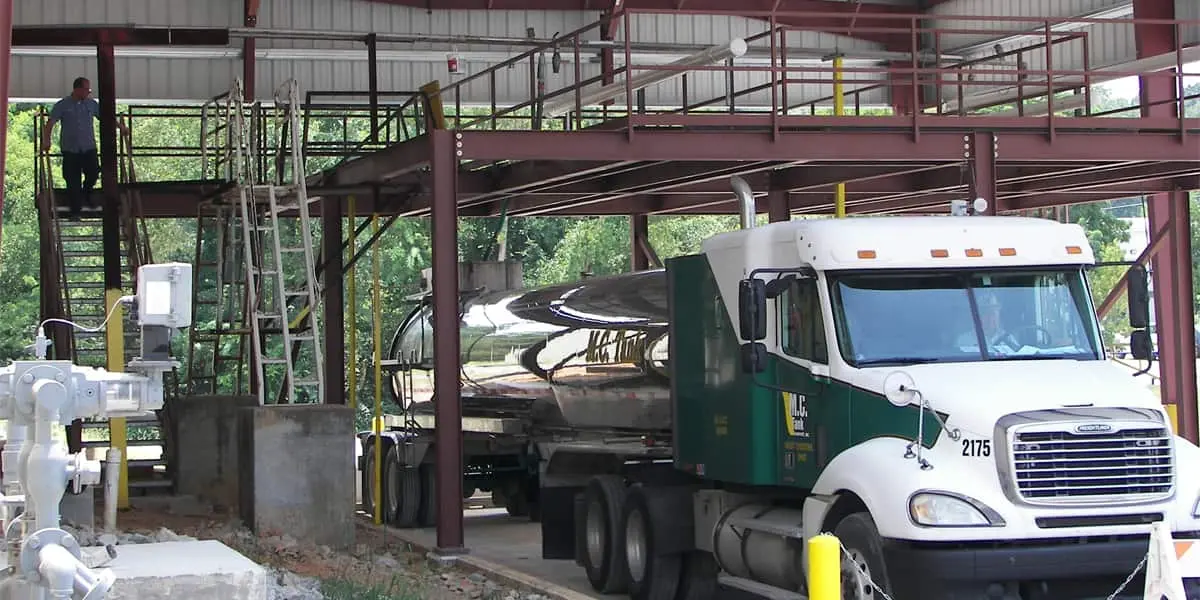
Regional chemical toll blending is one of the fastest ways to lower emissions, reduce costs, improve delivery speed, increase flexibility, and strengthen your supply chain. If you want practical results without building new facilities, this approach gives you a clear path forward.
Why does long-haul chemical shipping create unnecessary emissions?
Long-haul shipping increases emissions because it multiplies distance, fuel use, cost, risk, and inefficiency.
- Every extra mile increases fuel consumption, carbon output, delivery time, and cost.
- Heavy-duty trucks generate significant emissions per ton-mile.
- Centralized production forces products to travel farther than needed.
- Supply chain disruptions increase rerouting, delays, and waste.
Transportation is often a major contributor to Scope 3 emissions, which are the indirect emissions across your supply chain. For many chemical companies, these emissions are larger than direct operations.
How does regional chemical toll blending improve your operations?
Regional toll blending improves your operations by producing closer to your customers, reducing transport distance, improving speed, increasing flexibility, and lowering risk.
Instead of shipping finished products across the country, you ship smaller volumes of inputs to regional facilities and complete blending near the final destination.
This gives you:
- Faster delivery times, shorter lead times, fewer delays, better customer satisfaction.
- Lower freight costs, reduced fuel usage, fewer long-haul shipments, improved margins.
- Greater flexibility, scalable production, easier demand adjustments, and better inventory control.
- Reduced complexity, fewer logistics bottlenecks, simpler distribution networks, improved planning.
This model supports sustainable chemical manufacturing in Texas by aligning production with regional demand.
How much can you actually reduce emissions?
You can reduce emissions significantly by cutting total ton-miles, shortening delivery distances, optimizing routes, and avoiding unnecessary long-haul shipments.
For example:
- Centralized model ships full product over long distances.
- Regional model ships smaller inputs long distance and finished product short distance
- Total ton-miles drop sharply.
- Emissions decrease in direct proportion to the distance reduced.
What additional environmental benefits do you gain?
1. Less waste and cleaner processes
Regional toll blending reduces waste, improves material use, supports recycling, and lowers emissions from production processes.
- Solvent recovery systems reuse materials, reduce disposal, cut emissions, and improve efficiency.
- Controlled batch production minimizes overproduction, reduces scrap, improves yield, and lowers waste.
- Cleaner handling processes reduce spills, limit contamination, improve safety, and protect the environment.
- Lower VOC emissions improve air quality, support compliance, reduce hazards, and strengthen sustainability performance.
2. Support for cleaner formulations
Regional partners can help you adopt cleaner chemistries without building new infrastructure.
- Low-VOC formulations reduce air pollution, improve compliance, enhance worker safety, and meet customer expectations.
- Solvent-free blends reduce hazardous materials, simplify handling, lower emissions, and improve sustainability.
- Bio-based inputs reduce fossil dependence, support renewables, lower lifecycle emissions, and improve brand value.
- Biodegradable products reduce environmental impact, lower contamination risks, support regulations, and enhance market appeal.
3. Smarter resource use
Producing closer to demand improves how you use materials, energy, time, and storage.
- Smaller batch sizes reduce excess inventory, limit waste, improve freshness, and increase responsiveness.
- Local production reduces storage needs, cuts handling steps, lowers damage risk, and improves efficiency.
- Better demand matching reduces overproduction, improves forecasting, lowers costs, and reduces waste.
- Streamlined operations reduce energy use, simplify workflows, improve throughput, and increase reliability.
Why is regional blending a strategic advantage for your business?
Regional blending helps you meet sustainability goals, reduce costs, improve service, strengthen resilience, and stay competitive.
- Supports ESG reporting, improves transparency, strengthens compliance, and meets customer expectations.
- Reduces total landed cost, lowers freight spend, improves margins, and increases profitability.
- Improves supply chain resilience, reduces disruption risk, increases reliability, and enhances continuity.
- Aligns with market trends, supports reshoring, strengthens regional presence, and builds competitive advantage.
This is why many companies are investing in sustainable chemical manufacturing in Texas to stay ahead.
How does regional blending improve logistics and performance?
Regional blending improves logistics by shortening routes, increasing efficiency, reducing delays, and improving delivery reliability.
- Access to rail, barge, short-haul trucking, and optimized routes improves efficiency.
- Shorter delivery distances reduce delays, improve timelines, increase reliability, and enhance service.
- Reduced need for expedited shipping lowers cost, reduces emissions, improves planning, and avoids disruption.
- Better coordination improves scheduling, increases visibility, enhances tracking, and strengthens control.
What should you look for in a regional toll blending partner?
Choosing the right partner ensures you get environmental, operational, financial, and strategic benefits.
- Multiple US locations near customers, strong logistics network, regional coverage, scalable capacity.
- Proven environmental practices, waste reduction systems, emissions control, and compliance standards.
- Ability to handle custom formulations, consistent quality, flexible production, and technical expertise.
- Integrated services such as bulk RO water, packaging support, storage solutions, and distribution services.
Is local always greener?
Local production is often more efficient, but results depend on energy sources, process efficiency, facility design, and operational practices.
- Efficient regional plants reduce emissions, improve output, lower waste, and enhance sustainability.
- Poorly optimized facilities can increase emissions, reduce efficiency, raise costs, and limit benefits.
- Transportation mode matters; rail and barge are cleaner than truck, and air freight is the highest impact.
- Data-driven analysis helps compare real scenarios, improve decisions, validate impact, and support reporting.
The Bottom Line
Regional chemical toll blending helps you reduce emissions, lower costs, improve delivery speed, increase flexibility, and strengthen your supply chain at the same time.
By reducing transport distances, improving production efficiency, supporting cleaner chemistries, and aligning with regional demand, you gain measurable advantages without major capital investment.
If you are serious about improving performance and sustainability, sustainable chemical manufacturing in Texas offers a practical, scalable, and forward-looking solution.
Also Read